
Is Shampooing Everyday Bad For You?
Reviewed by Dr. Rishu Gupta, MD
The Trend of “No Poo”
If you’ve been on HairTok for more than 12 seconds, you’ve probably seen someone say:
“Stop shampooing! Your scalp will learn to produce less oil.”
Then you discover the No-Poo Movement, a community that believes you can “train” your scalp to stop needing shampoo entirely.
It sounds intriguing. Minimalist. Natural. Very off-grid homestead chic.

But is it actually true?
Let’s look at the research:
- In a 2021 study on Asian hair types, daily shampooing improved scalp health and actually led to more “good hair days.”
- In another study, even using anti-dandruff shampoo did not increase scalp oil production — meaning washing doesn’t trigger your scalp to make more oil.
So if shampooing doesn’t cause more oil…
Where does the oil come from? And why does your hair feel oily again the day after you wash?
Let’s break down what’s really happening.
How Your Scalp Decides How Much Oil to Make
Your skin does not have little “oil sensors” that panic when you shampoo.
Your sebaceous glands (tiny oil factories next to hair follicles) are mostly controlled by genetics, hormones, age, and inflammation.

Your scalp produces oil at its own natural rate. When enough oil builds up on the surface, back pressure in the follicle slows more from coming out. Shampooing removes that surface oil, releasing the pressure, so oil continues to flow at its usual rate.
So if your scalp gets oily again quickly?
That’s not “rebound oil.” That’s just sebum built up in the gland being released.
The only proven ways to truly reduce sebum production are:
- Prescription medications like isotretinoin (which shrink sebaceous glands)
- Hormone-modulating treatments (such as spironolactone or certain oral contraceptives)
- Natural age-related hormonal changes (sebum typically declines over adulthood)
- Reducing chronic scalp inflammation
Diet, stress, and environment can contribute to sebum production, so changing those factors may help reduce oiliness as well.
Should You Wash More Often or Less Often?
It depends on your scalp, not someone else’s TikTok routine.
Potential Benefits of Frequent Shampooing
- Keeps scalp feeling fresh, especially if it naturally produces more oil
- May reduce scalp inflammation (which can affect shedding)
- Removes buildup from oils, conditioners, silicones, and styling products
Potential Downsides
- May dry out hair strands, especially if the shampoo is strong
- Can be irritating if you have eczema-prone or sensitive skin
- Time-consuming depending on your hair type or style
So What’s the Right Wash Schedule?
There is no universal rule.
If your scalp feels oily and itchy by day 1 → wash daily.
If your scalp stays comfortable for 5+ days → stretch it out.
Wash when your scalp tells you to. Not when the internet does.
If you wash often, use gentle shampoos that protect the skin barrier. If you wash less often, consider rotating in a clarifying shampoo occasionally.
And if you have a sensitive scalp, look for fragrance-free, hypoallergenic formulas. These help reduce the tiny, chronic irritations that often lead to dandruff, redness, or scalp acne over time.
What I Do Personally
I wash every 3–4 days.
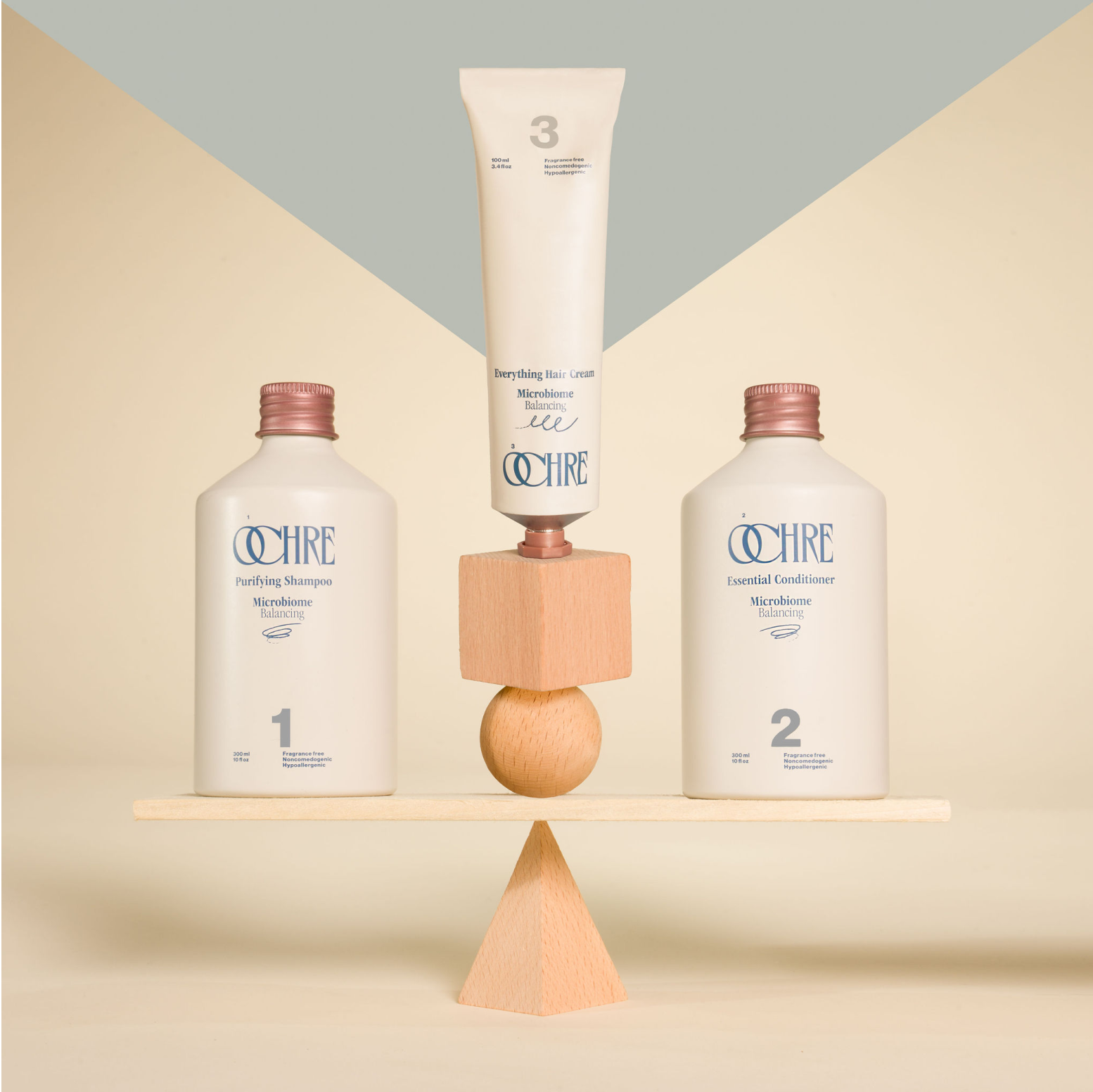
I used to be be a daily washer, but after switching to OCHRE, I’ve noticed my scalp staying happy for longer.
But remember, your sweet spot may be totally different. Your scalp is individual. Your routine should be too.
Sources:
- C. Pierard-Franchimont, J.E. Arrese, G.E. Pierard. Sebum flows dynamics and antidandruff shampoos. J. Society of Cosmetic Chemists. March/April 1997.
- Del Rosso, James Q., and Leon Kircik. The primary role of sebum in the pathophysiology of acne vulgaris and its therapeutic relevance in acne management. Journal of Dermatological treatment 35.1 (2024): 2296855.
- M. Picardo, M. Ottaviani, E.Camera, A. Mastrofrancesco. Sebaceous gland lipids. Dermato-Endocrinology, 1:2, 68-71. 2009.
- Punyani S, Tosti A, Hordinsky M, Yeomans D, Schwartz J. The Impact of Shampoo Wash Frequency on Scalp and Hair Conditions. Skin Appendage Disord. 2021 Apr;7(3):183-193. doi: 10.1159/000512786. Epub 2021 Feb 15. PMID: 34055906; PMCID: PMC8138261.