

The Number One Issue a Hairstylist Sees
An interview with scalp wellness specialist Meagan Schriver.
Scalp care has been blowing up, and I'm not surprised.
In conversations with hairstylists, trichologists, and dermatologists, I’ve consistently heard the same thing: more people are struggling with scalp issues than ever before, from dryness and flakes to irritation and hair loss.
To better understand what professionals are seeing behind the chair, I spoke with Meagan, a hairstylist of 16 years and owner of Hair House, a scalp wellness salon in Missoula, Montana.
We talked about the most common scalp concerns she sees, the product habits she wishes clients would stop, and why scalp health has become such a major focus in beauty and wellness.

“Product buildup is the number one issue I see.”
When asked what scalp concern she encounters most often, Meagan didn’t hesitate.
“Product buildup is the number one issue I see. Also, clients not taking the time to DRY their scalps. Going to bed with wet hair and then wondering why their scalp is itchy or they accumulate excessive oil.”
Many people try to “fix” their scalp with more products, when the better approach may actually be removing buildup that can congest follicles and disrupt the scalp microbiome.
The ingredients she encourages clients to avoid
Meagan takes a scalp-first approach to haircare, and she believes ingredient awareness matters more than most people realize.
“Fragrances can greatly affect the pH level of the scalp and disrupt the scalp’s natural microbiome.”
Her recommendation?
“If clients can steer clear of fragrances and aerosols, it can make a huge impact toward a more balanced scalp.”
I loved hearing that.
Fragrance is one of the most common causes of irritation and sensitization in haircare, especially for people with eczema-prone or reactive skin.
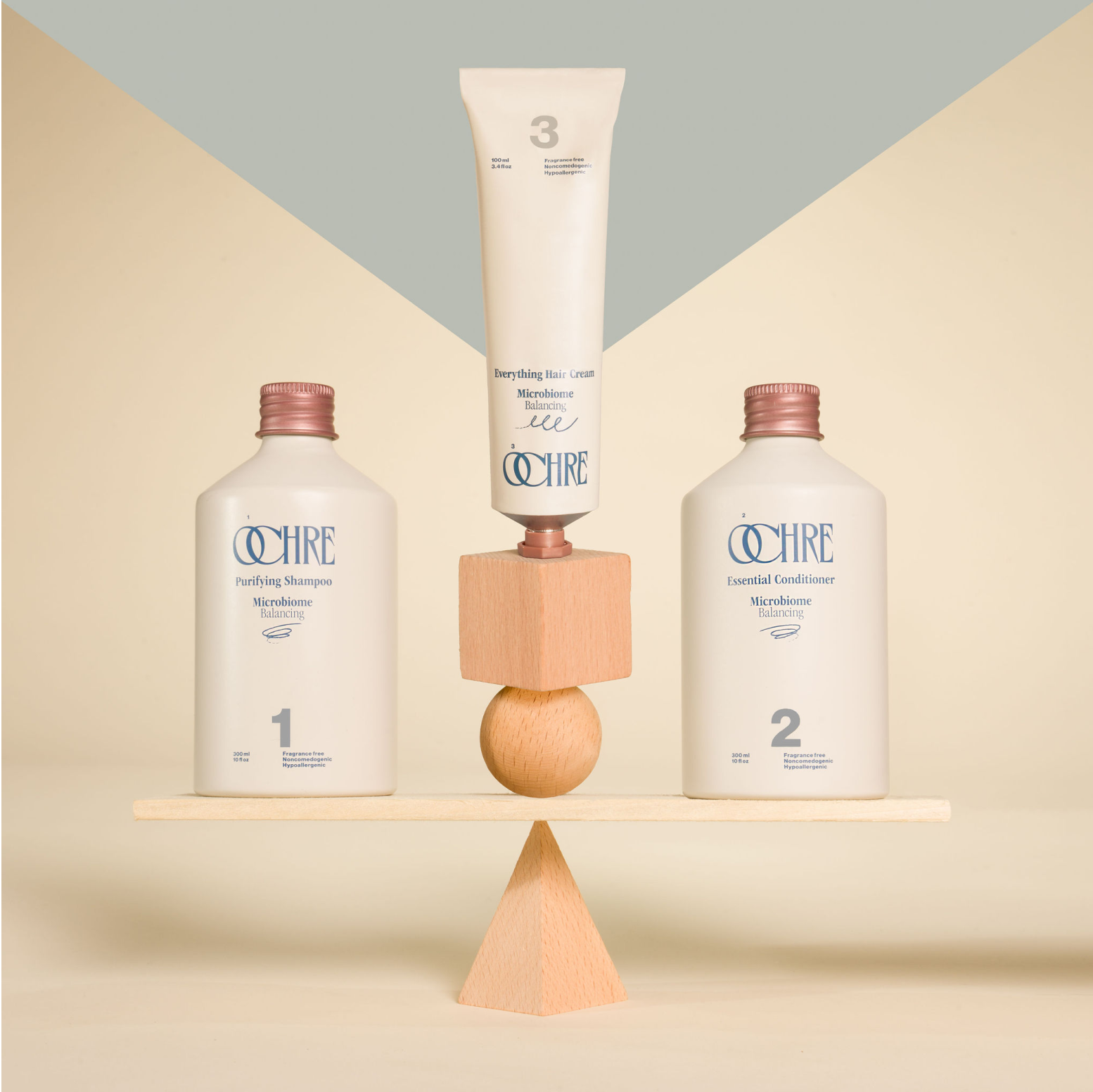
It’s why all OCHRE formulas are fragrance-free.
“I was blown away by how nourished my scalp felt.”
When Meagan first tried OCHRE, the immediate difference she noticed wasn’t her hair. It was her scalp.
"When I tried OCHRE I was blown away how enriched my scalp felt. Living in Montana the air is SO dry here. Almost everyone has some level of scalp dryness. Using the OCHRE conditioner on my scalp greatly reduced the tightness and dryness that I normally struggle with."
Most conditioners are formulated primarily for the hair shaft and are often avoided on the scalp because they can contribute to buildup or irritation.
OCHRE formulas are designed with scalp health in mind, using skin-supportive ingredients so you don’t have to worry about your conditioner or leave-in products touching your scalp.

Why scalp health is becoming mainstream
Scalp treatments and head spas have exploded in popularity over the last few years, but Meagan believes the shift is part of a much bigger movement.
“People are more aware of what’s in our food, products, and haircare.”
She also sees scalp health as deeply connected to overall wellness.
“You can detect so much of what’s happening in the body based on what’s happening with the skin and scalp.
Think of hair loss, most people get scared and want to get to the root of why that’s happening. It all comes back to our gut which is our second brain.”
And beyond the physical benefits, Meagan says scalp services can also offer something many people are craving right now:
“People are desiring to be healthy and to step out of flight or fight mode. Scalp services can offer in-sites and relief to both.”
One simple thing most people could do today
I ended my conversation by asking Meagan what simple changes would make the biggest difference for scalp health.
Her answer was refreshingly practical:
- Don’t go to bed with wet hair
- Wash your hair consistently (around 2–3x weekly for many people)
- Consider a probiotic as part of overall wellness (e.g. take care of your gut)
- Use good quality products
And yes, she added:
“… like OCHRE.”
I’ll take that.